

Why conventional solutions struggle in thin sheet metal?
Thin sheet materials provide very limited thread engagement. The result is a higher risk of stripped threads, poor clamp load retention, and inconsistent assembly quality.
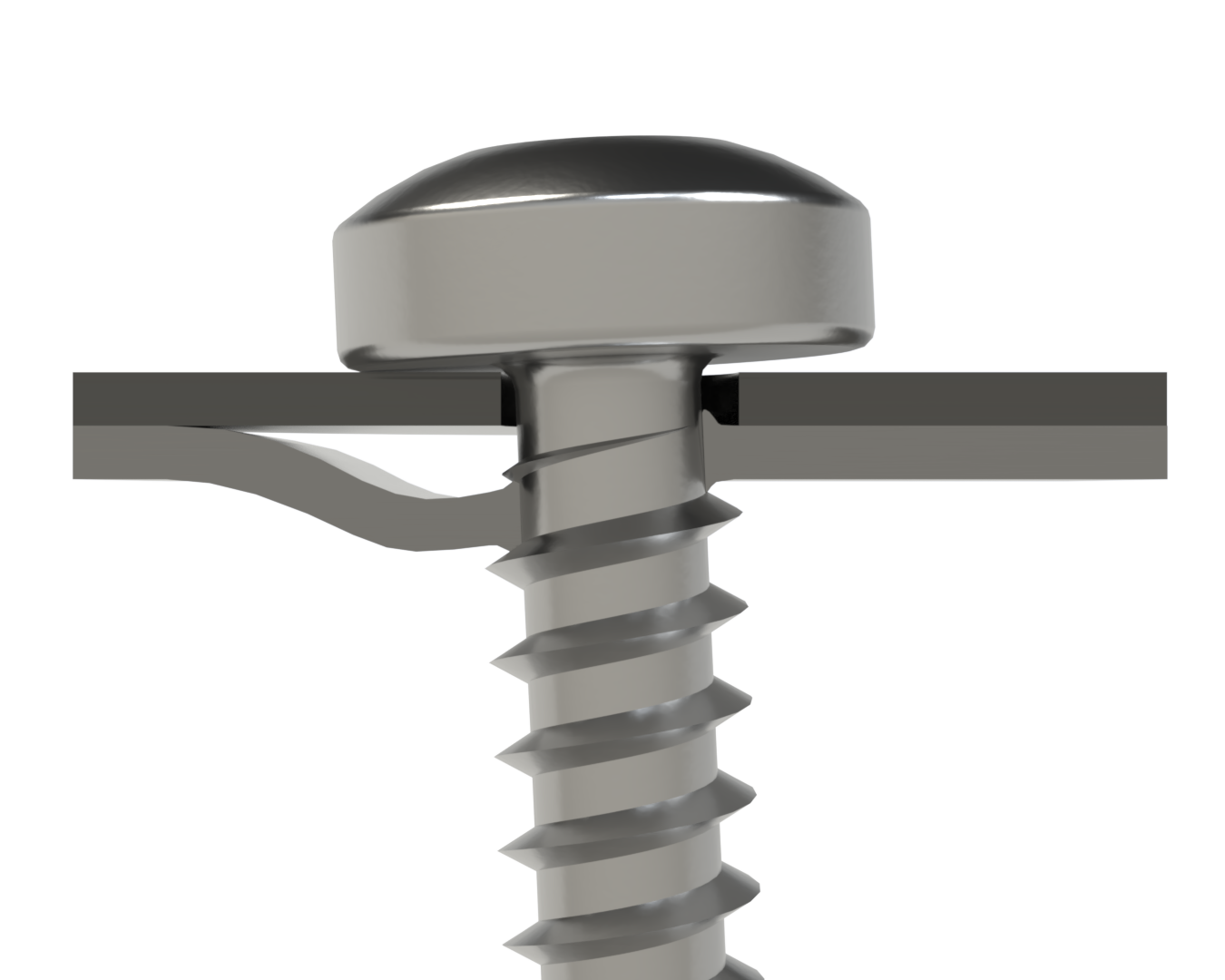
Standard self-tapping (Type AB) screws
When the sheet is thinner than the thread pitch, less than one full thread can be captured by the material. Rather than forming continuous engaged threads, the screw "clips" through the sheet, leaving no continuous helical contact to react the axial load.
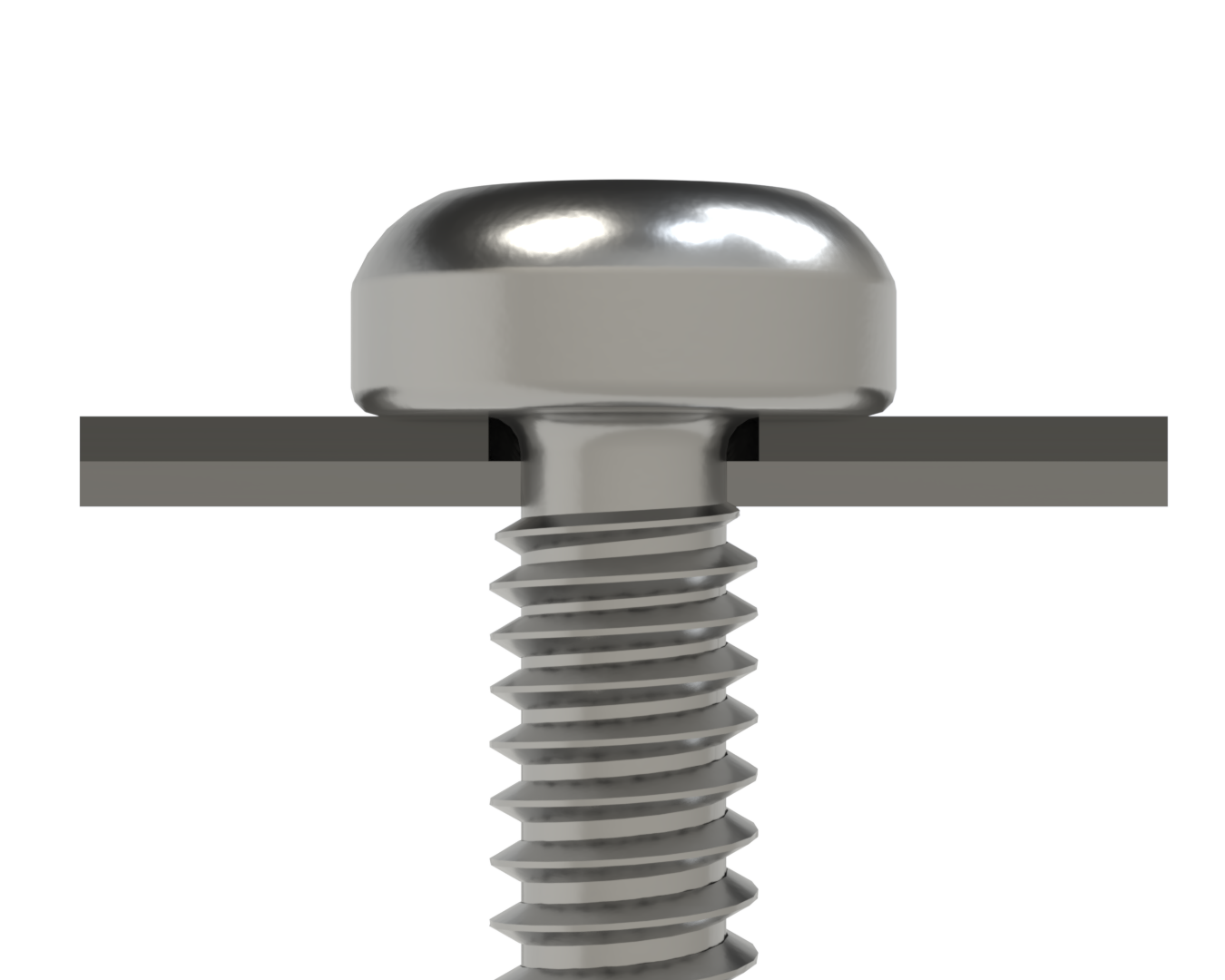
Standard DIN 7500 thread forming screws (single-lead thread)
DIN 7500 screws have an unthreaded run-out length near the head. When the sheets are thinner than this run-out, the sheet engages only these incomplete threads, making only partial thread contact.
Additionally, the point geometry makes it harder for the screw to engage in smaller holes — which are precisely the ones that would provide better engagement.
Therefore, manufacturers often resort to hole extrusion, which raises the engagement length and helps guide the screw into the hole. However, this increases total assembly cost.
Why FASTITE® 2000™ screws stand out as the most efficient solution?
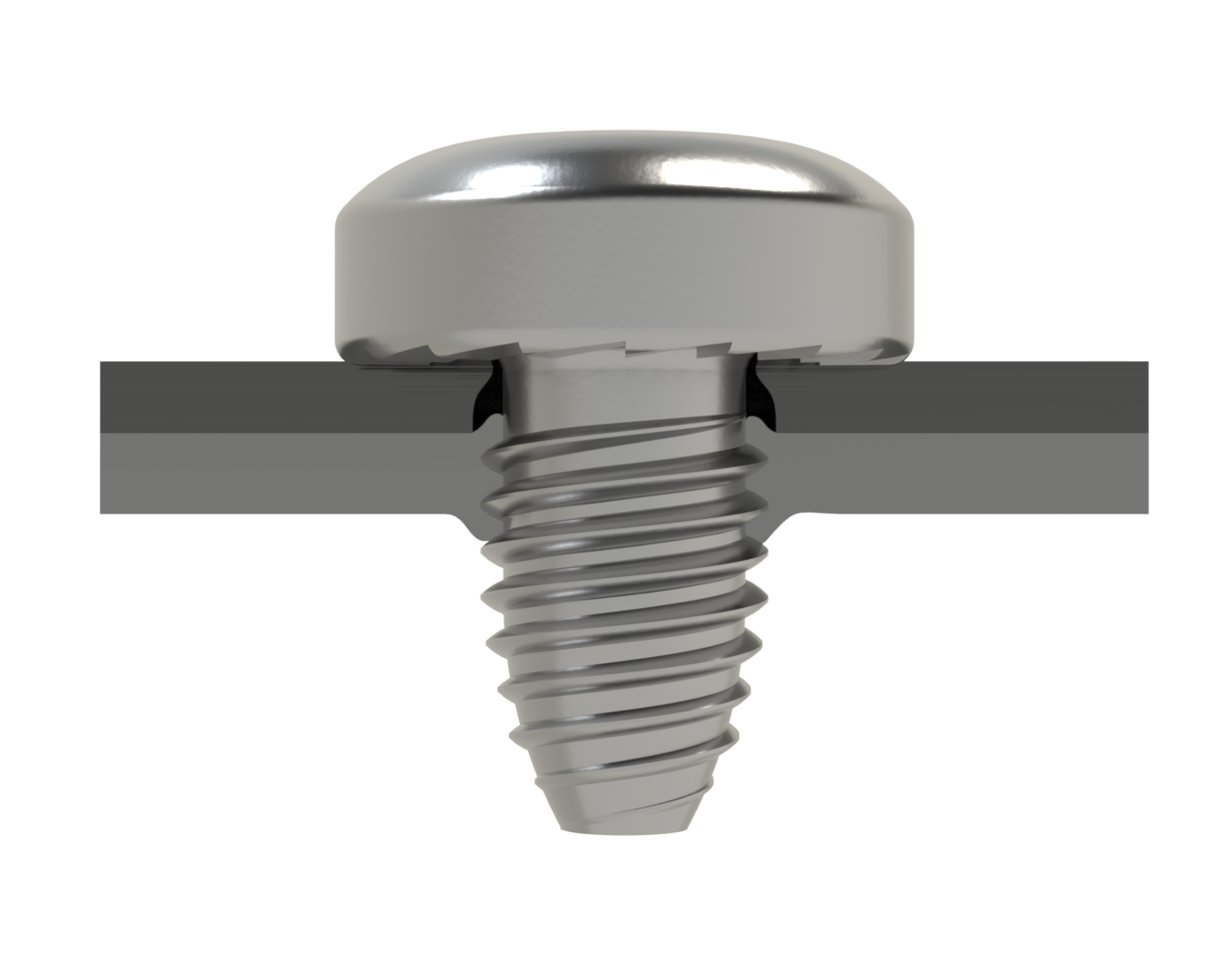
FASTITE® 2000™ maximizes stripping resistance while reducing total assembly cost. Its performance is driven by the following key features:
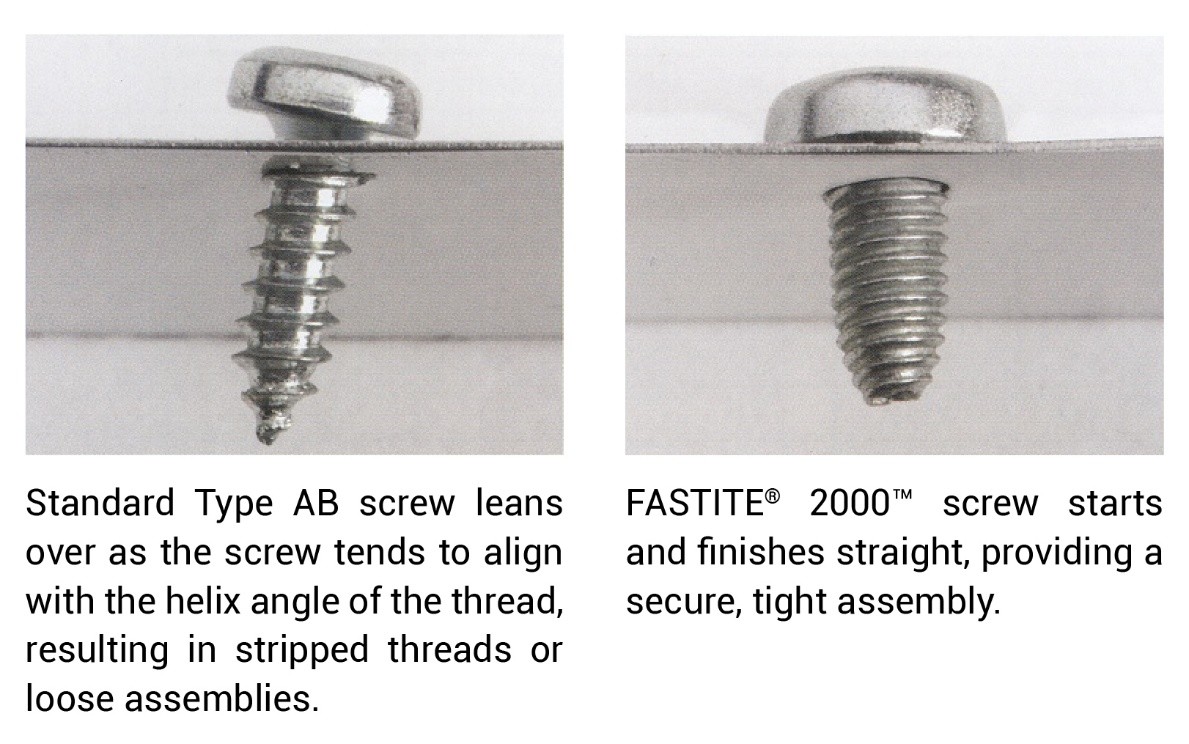
The Twin-lead thread centers the fastener in the hole, allowing it to start and finish straight for proper head seating, ensuring a secure, tight assembly.
The Twin-lead thread creates opposing threads in thin material, increasing thread contact and providing higher loosening resistance.
The CA point allows entry into small holes to create self-extrusion of the sheet metal and increase resistance to stripping.
TRILOBULAR™ body provides low threading torque and high resistance to vibrational loosening.
Underhead serrations further increase resistance to stripping and loosening.
FASTITE® 2000™ screws solve thin-sheet assembly challenges while reducing complexity and cost:
- ✔ Fast installation reduces assembly time.
- ✔ Stable and safe assembly process (low threading torque and high stripping torque).
- ✔ No stripping, eliminating rework and scrap.
- ✔ No additional elements required to prevent loosening.
FASTITE® 2000™ vs other solutions
Seen this way, the cheapest fastener can become the most expensive solution. The table below compares each option through this lens:
| Fastening solutions | Fastener cost |
Total cost of assembly |
Disadvantages ✘ | Advantages ✔ |
|---|---|---|---|---|
| FASTITE® 2000™ screw | ●● | ● |
Thread in nut member not compatible with metric screw |
Stripping resistance Loosening resistance Fast assembly Safe and tight assembly Versatile solution |
|
Self-tapping screw (Type AB) |
● | ●● |
Risk of stripping Loosening Low clamping Unstable threading process |
Widely available Low unit cost |
| Blind rivet | ●● | ●●● |
Loosening Low clamping Debris and noisy process Non-removable, non-reusable |
Widely available simple joining method |
|
DIN 7500 thread-forming screw |
● | ●● |
Limited stripping resistance Alignment issue Loosening |
Widely available Compatible with metric screw |
|
Metric + insert or clinched nut |
●●● | ●●● |
Loosening Cross threading |
Widely available Removable joint |