

Low shear strength
Plastics have much lower shear strength than metals. This limits how tightly the joint can be clamped and increases the risk of standard screws stripping the mating threads in the boss during assembly.
Stress relaxation
Screw joints are held together by the clamping force generated when the screw is tightened. In plastic parts, the polymer's molecular chains slowly rearrange over time to relieve internal stress — so the clamping force decays even though nothing has moved. This gradual loss of preload can leave the joint under-tensioned, risking leaks, movement or eventual loosening due to external forces or vibrations.
Boss cracking
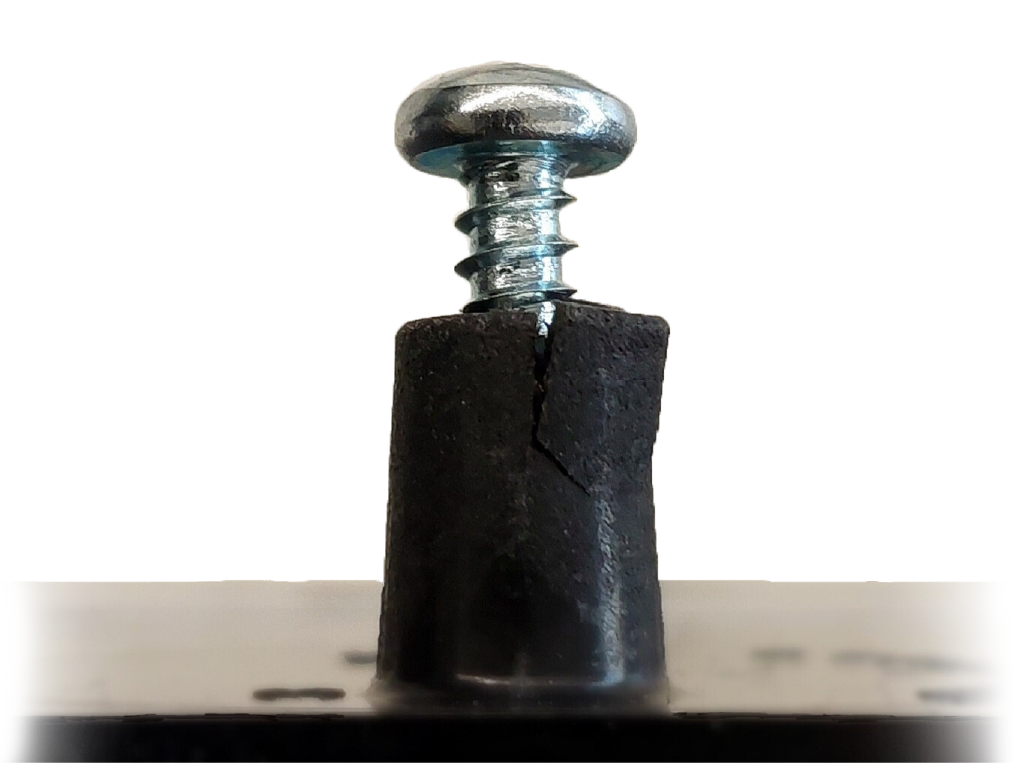
Screw installation forces the thread flanks against the boss wall, generating radial pressure that stretches the surrounding plastic. When the stress exceeds the material’s limit – from excessive torque, poor thread geometry, or thin boss walls – cracks initiate at the bore surface and propagate outward until the boss fails.
Comparing common fastening solutions for plastics
To optimize your assembly line for both performance and cost, it is essential to understand how common fastening methods handle these challenges.
Metric screws with metallic inserts
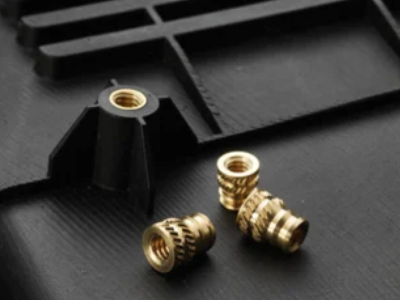
Embedding brass inserts with internal threads creates a reusable, metal-to-metal joint that is highly resistant to thread stripping. However, this approach is pricey and complex: the inserts themselves are expensive, and require secondary installation steps (such as ultrasonic, heat, or mold-in insertion) that demand specialized machinery, processing steps, and installation time, making them the most expensive option overall.
Standard self-tapping screws

Originally designed for sheet metal applications, these screws feature a standard 60° thread profile that is poorly suited for plastic. The wide thread angle exerts high radial forces during installation, pushing the plastic outward. If the boss wall is not thick enough to absorb this pressure, the plastic will crack. Additionally, they provide low pull-out resistance and carry a very high risk of stripping the thread in the boss.
REMFORM® thread-forming screws

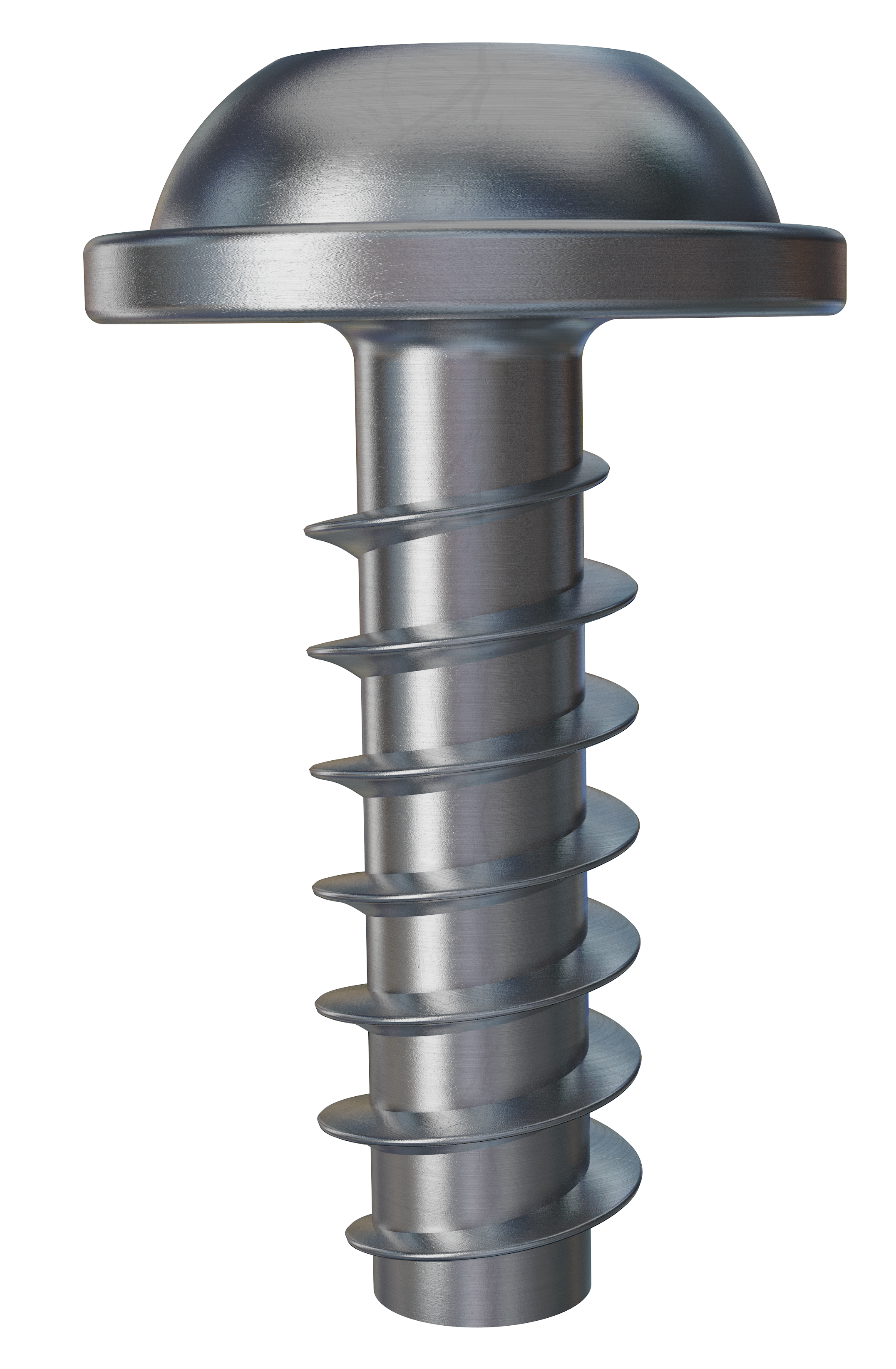
Specifically engineered for direct assembly into plastics, REMFORM® screws feature an asymmetrical thread profile with a narrow 30° flank angle. This guides the plastic material to flow smoothly along the load-bearing thread flank — maximizing thread engagement, reducing the risk of boss cracking, providing exceptional resistance to stripping and vibration loosening, and resulting in high clamping force maintained over time.
Here's how the three methods perform against these challenges:
| At a glance | Metric screw + insert | Self-tapping screw | REMFORM® |
|---|---|---|---|
| Overall rating | Medium Excellent performance, but cost-prohibitive at high volume |
Low Cheap to buy, but can fail mechanically or self-loosen |
Excellent Excellent performance at direct-fastening cost |
Technical performance
| Attribute | Metric screw + insert | Self-tapping screw | REMFORM® |
|---|---|---|---|
| Clamping force | Excellent Metal threads allow higher torque without stripping |
Poor Poor engagement and localized stress accelerate tightening force loss |
Excellent Deep thread engagement enables higher torque, minimizes relaxation, and retains high clamping force |
| Pull-out resistance | High–Excellent Depends on insert knurl quality & installation process |
Low Shallow engagement; prone to stripping & pull-out |
Excellent The asymmetric thread profile maximizes shear area, enhancing pull-out resistance |
| Risk of cracking | Very low Radial stresses absorbed by metal insert |
Very high 60° thread angle acts as a wedge, forcing plastic outward |
Very low 30° flank angle directs material flow safely |
| Resistance to creep relaxation | High Tension held between metal threads |
Poor High residual stress accelerates plastic relaxation |
High Balanced tension minimizes relaxation |
| Thread reusability | Excellent Designed for repeated assembly/disassembly |
Very poor Each use deforms the plastic threads, reducing holding force and stripping margin |
High Builds a stronger, more durable thread |
Cost
| Attribute | Metric screw + insert | Self-tapping screw | REMFORM® |
|---|---|---|---|
| Unit cost | Very high High-precision brass/metal inserts |
Low Standard commodity fastener |
Low–Medium Specialized geometry, single component |
| Installation & labor | Very high Secondary insertion step: ultrasonic, heat or molding |
Low Direct single-step driving |
Low Direct single-step driving into boss |
| Tooling investment | High Insert presses, ultrasonic horns, specialized molds |
Low Standard drivers |
Low Standard assembly drivers |