Assemble die‑cast components without thread failures

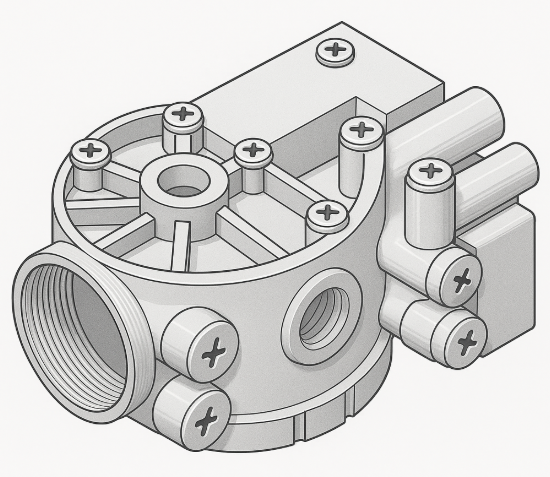
1. Picture of a die-casting parts with screw

As the trend toward electrification and energy efficiency accelerates, industries such as automotive, electronics, lighting, and other weight‑sensitive sectors increasingly demand lightweight materials. Lighter components enhance performance and efficiency while supporting sustainability through reduced resource use and emissions. Die casting has become a preferred manufacturing method for producing strong, lightweight, and precise components—though assembling these parts presents unique challenges.

Challenges in assembling die‑cast parts

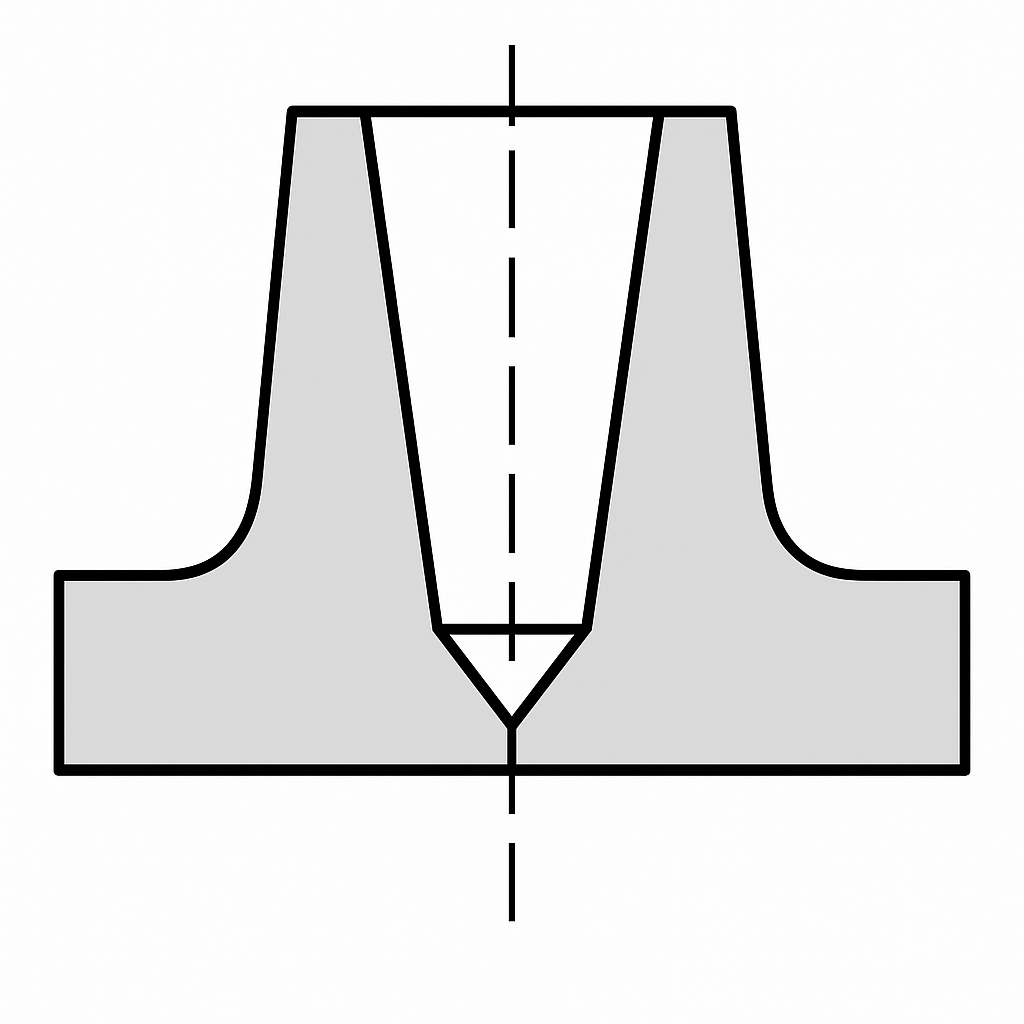
Assembling die‑cast components can be challenging because of how screw holes are formed during the casting process. In die casting, holes are created by a core pin with a small draft angle, so when molten metal flows around the pin, the resulting hole reproduces its slightly conical shape rather than being perfectly cylindrical.

Why draft angle is important in die casting:​

  • It facilitates part ejection from the die and reduces the risk of sticking.
  • It helps prevent surface scratches, minimizes rework, and extends tool life by lowering mechanical stress and abrasion.
  • By reducing wear and stress, the cavity maintains its geometry and surface finish for a longer time.
2. Picture/drawing of a screw hole with draft angle

Blockage and thread stripping during installation

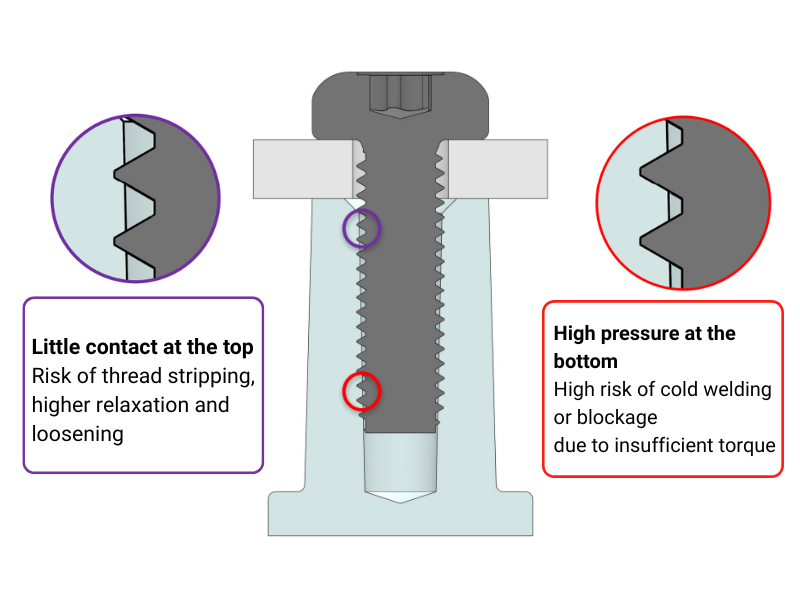
When a screw is inserted into a tapered or conical screw hole, uneven thread engagement occurs along the depth: the upper part of the hole has less contact with the screw, while the lower part experiences higher pressure. This uneven load distribution can cause assembly issues such as thread stripping or blockage, often leading to line stoppages, costly rework, and production delays.

3. Image to show the difference between the top and bottom parts of the hole

Do you experience challenges when assembling die‑cast parts? We have the solution.

Inconsistent draft angles in die‑cast hole

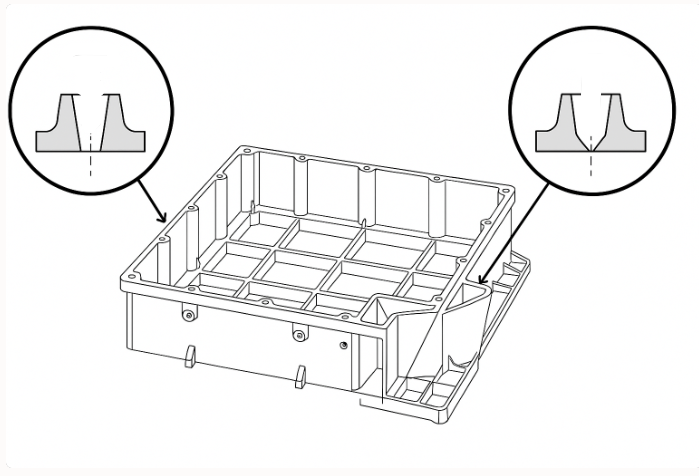
Core pins wear down over time due to erosion from molten metal flow, thermal cycling, and abrasion. Therefore, different pins may wear at different rates and the draft angles can vary widely, with parts exceeding 2º or becoming inconsistent even within the same batch.

4. Image/drawing to show in one die casting parts with different degrees of draft angle

Typical workaround approaches - but ineffective

Using oversized screws​

  • Results in poor contact and reduce stripping resistance.

Tapping or drilling the holes

  • Increase assembly cost due to the additional tapping operation.

Applying lubricant on the screws

  • Creates low friction, the effect is often inconsistent and inefficient.
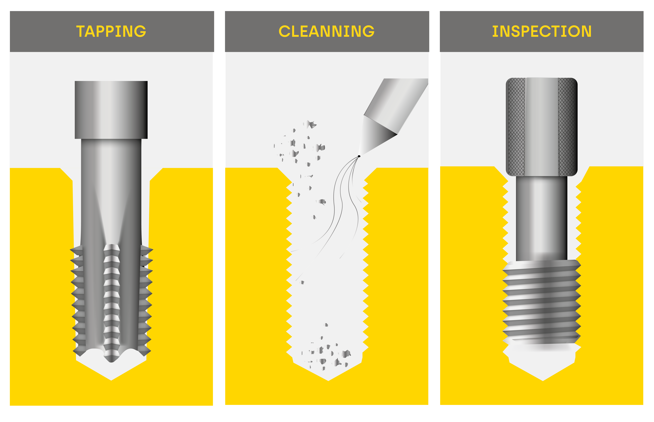
5. Picture of tapping process

The solution for fast, smooth assembly in die-cast parts

At CELO, we provide fastening solutions specially designed for die-cast assemblies and tailored to each application. They help to:

For assembly:

  • Minimize the risk of screw blockage
  • Reduce the risk of stripping
  • Shorten assembly time

For the joint:

  • Deliver excellent pull-out and stripping resistance
  • Offer superior resistance to vibration loosening
  • Provide higher clamping force
  • Require low thread-forming torque
  • Prevent cross-threading

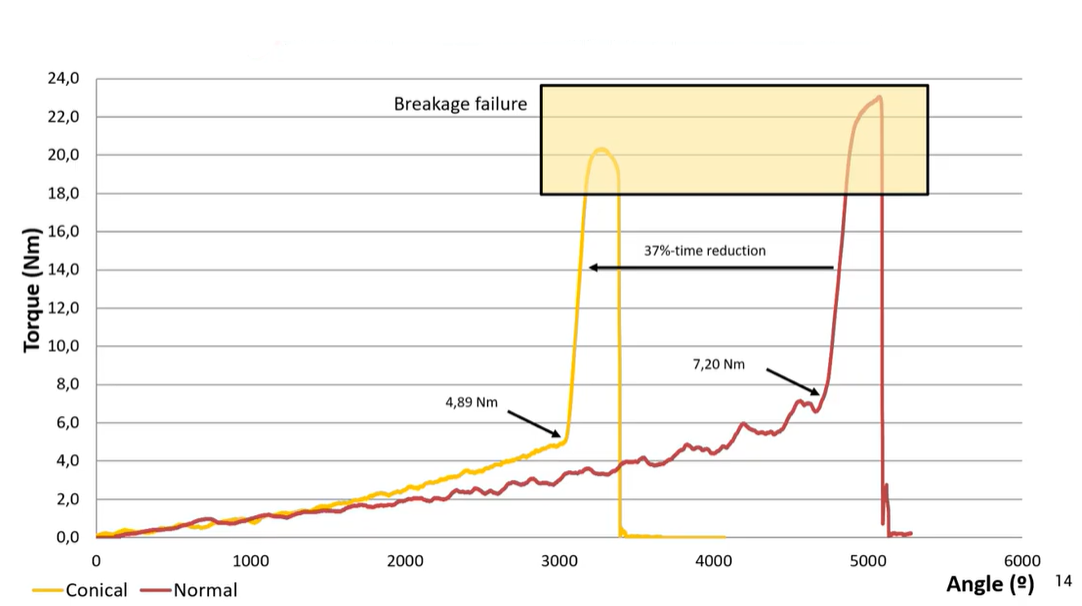
The graph shows test results under unfavorable conditions: the threading torque of the CELO solution increased by only 16%, demonstrating a more stable assembly capable of absorbing variations in the angle.

Compared to other screws, CELO solutions for die-cast parts require fewer turns to fasten the joint, resulting in a significantly faster and more efficient assembly process.

6. Graph to show the difference between CELO solution and other screws (NOT specify conical screw)

Contact our experts to enhance your die casting assemblies.

Quick overview of die casting: how die-cast parts are produced

Die casting is a high‑speed manufacturing process where molten non‑ferrous metals—typically aluminum, magnesium, zinc, or their alloys—are injected under high pressure into reusable steel molds called “dies.” As the metal cools, it solidifies into complex, dimensionally precise parts.

Thanks to its ability to maintain tight tolerances and support high production volumes, die casting is widely used across various industries. Additionally, die‑casting materials are highly recyclable, making it a sustainable solution aligned with circular‑economy principles.


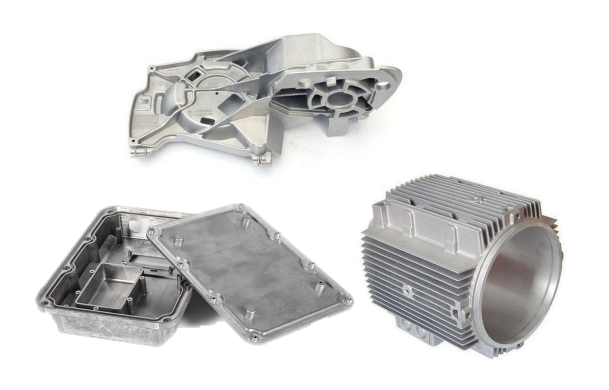
7. Die casting parts

Why draft angle is important in die casting:​

  • It facilitates part ejection from the die and reduces the risk of sticking.
  • It helps prevent surface scratches, minimizes rework, and extends tool life by lowering mechanical stress and abrasion.
  • By reducing wear and stress, the cavity maintains its geometry and surface finish for a longer time.

Contact us today to discover how CELO’s fastening solution can help you achieve faster, more reliable die-casting assemblies.